Workflow Automation: Offline PWAs and Pipelines Your Team Will Use
Digitize field work with offline PWAs, consolidate data through ETL, and automate dashboards and reporting—without forcing a SaaS template on your process.
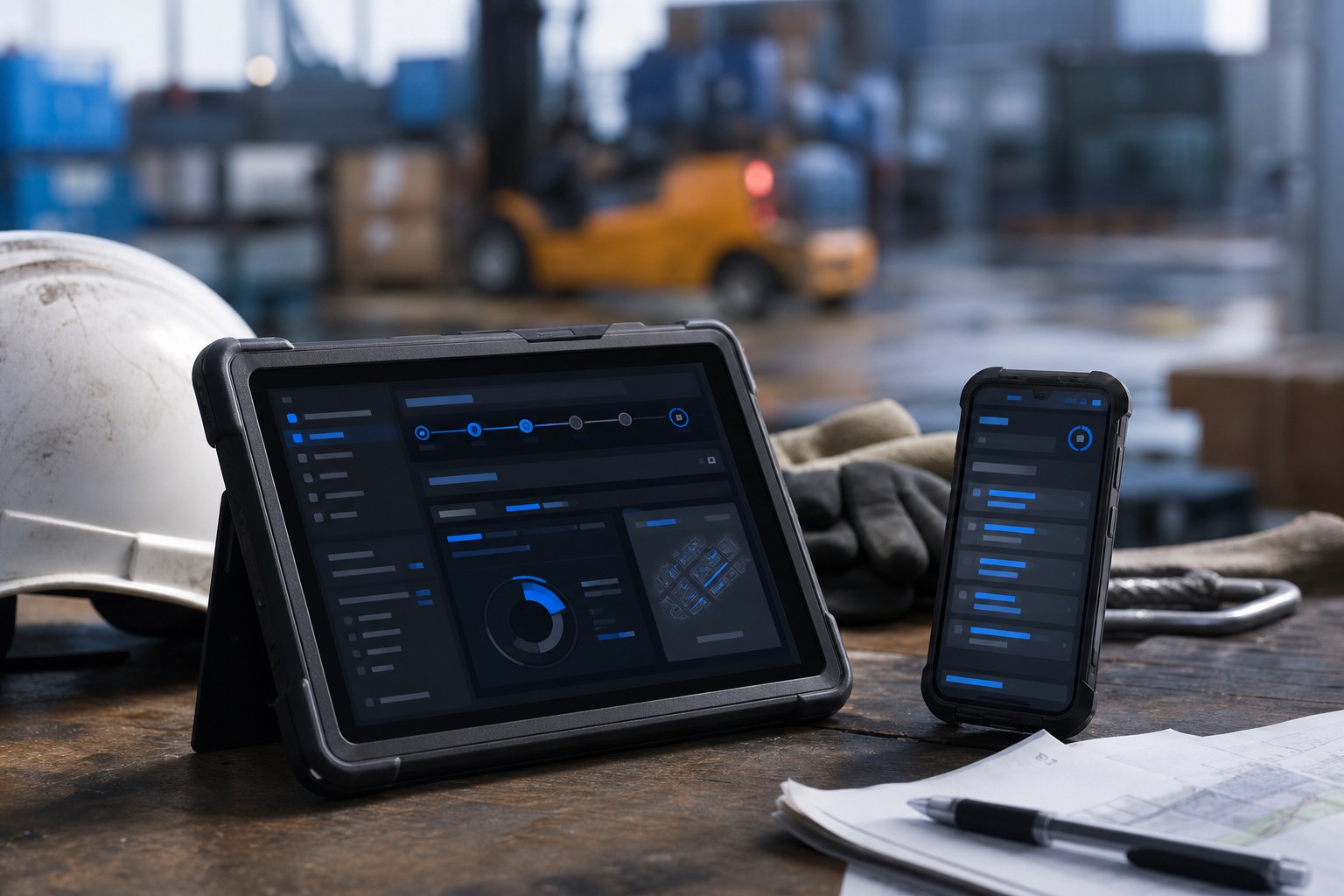
Forrester has long argued that customer experience failures often trace to operational friction behind the scenes—handoffs that stall, data that arrives late, and reports leadership cannot defend in a renewal meeting. Workflow automation is how you remove those handoffs without buying a generic SaaS template that ignores how your crews actually work. The practical stack combines offline-capable progressive web apps (PWAs) for capture, ETL and scraping pipelines where vendors withhold APIs, role-based dashboards fed from one operational store, and reporting automation that ships PDFs and email packs on cadence instead of on panic every Friday afternoon.
This article explains what belongs in a workflow automation program, how each layer depends on the next, and why adoption beats feature count. If you run multi-team operations, see how phased delivery fits security and scale on operations leaders. If you need one portal and one report autopilot without enterprise overhead, the patterns for small business owners start smaller but use the same building blocks. For the full service picture—custom portals, Python ETL, multi-tenant dashboards, and scheduled client packs—see workflow automation & custom portals.
Key Takeaways
- Workflow automation chains capture, validation, sync, dashboards, and reporting—not a single app purchase.
- Offline-first PWAs reduce app-store friction while matching real job-site connectivity.
- ETL and scraping feed one operational source of truth when vendor APIs do not exist.
- Role-based dashboards show each role what they need without export gymnastics.
- Report automation pays off only after capture and consolidation are trustworthy.
- Small business and operations programs differ in scale, not in core architecture.
What belongs in workflow automation?
According to the U.S. Bureau of Labor Statistics, millions of workers operate in field-heavy industries where job truth is still born on paper, in texts, or in personal notes before anyone in the office can act. Workflow automation replaces that chain with engineered steps: capture at the source, validate before sync, load into a store dashboards and reports share, and notify humans only when something falls outside rules. The short answer to “what belongs” is whatever your team already does manually between field complete and customer-visible status—minus the copies in between.
Workflow automation & custom portals typically combines four layers:
- Offline-capable PWAs for crews, drivers, and subcontractors who will not install a corporate app store build.
- ETL and integration pipelines (APIs, scheduled exports, scraping where portals lack APIs) so vendor data and legacy exports land in the same store as field capture.
- Multi-tenant, role-based dashboards so dispatch, supervisors, finance, and executives read one timeline—not parallel spreadsheets labeled final_v3.
- Report generation (PDF, email, client packs) on a schedule, with humans reviewing exceptions instead of assembling every document by hand.
Automation is not “more software.” It is fewer manual steps your team already resents, measured in hours returned to the business and errors prevented before they become credit memos or lost renewals.
Citation capsule: Workflow automation is a pipeline architecture problem. PWAs, ETL, dashboards, and reporting are layers in one program; buying only one layer while leaving re-keying in place recreates friction at the next handoff.
Why do PWAs beat app-store rollouts for operations?
The Pew Research Center reports near-universal smartphone use among U.S. adults, but “everyone has a phone” is not the same as “everyone will install your app from a store, log in with corporate SSO, and update before Monday’s jobs.” Progressive Web Apps install from a link, cache shell and form logic locally, queue submissions until connectivity returns, and update centrally when you ship fixes. Distribution wins pilots; visible sync status keeps crews trusting the queue on the worst connectivity day of the month.
PWAs fit operations when offline forms, photos, signatures, barcode scans, and occasional location on submit are the core need—not continuous background GPS or Bluetooth peripherals as product differentiators. Native apps still matter when deep device APIs are the product. Many regional service, logistics, construction, and facilities programs land on PWA first and revisit native only if retention proves a device-specific gap.
Offline architecture has three layers teams should design explicitly before launch:
- Cached shell and assets so the app opens on site without waiting on a round trip.
- Durable local queue for submissions until the server acknowledges success—silent failure is how crews route around the official tool.
- Conflict policy when the same job was edited in the office while the field was offline. Last-write-wins is easy and dangerous; per-field rules or supervisor merge queues should be documented, not improvised in production.
Sync UX belongs in the same conversation as sync code. Show pending count, last successful sync time, and one obvious retry. A foreman who cannot tell whether yesterday’s jobs reached billing will not tap extra screens today.
[PERSONAL EXPERIENCE] Pilots that stick almost always include one internal champion who rides along for a day in week one and fixes three confusing labels before week two. PWAs that look fine in the office but fail in glare, gloves, or one-handed use die regardless of backend quality.
Citation capsule: Offline-first PWAs trade app-store friction for engineering discipline on queues, conflict rules, and visible sync status. Distribution and same-day updates are operational advantages, not only developer preferences.
How should field capture be designed for adoption?
Adoption is a workflow design problem, not a training marathon. If the new flow has more taps, more waiting, or less clarity than the clipboard or the group text, people will route around it within a quarter. Map the current process on paper first—where data is born, where it is copied, where it is “fixed” before a customer sees it. Remove steps before adding screens.
A practical field capture checklist:
- Structured forms with validation at entry, not at 6 p.m. in the office.
- Attachments (photos, signatures, scans) tied to job records, not loose camera rolls.
- Defaults for repeat job types so crews are not retyping what dispatch already knows.
- Error messages a gloved hand can read on a bright screen—every extra field is a vote for the old path.
- Audit trail for who changed what and when, for disputes and compliance.
Run a two-week pilot with one crew or region. Give them a human support line that can fix bad dropdowns the same day. Measure time from job complete to record visible in the office dashboard, office minutes spent re-keying per job (target zero for pilot fields), invoice error rate on pilot jobs, and daily active use—not installs. Prettier dashboards built on late data accelerate bad decisions; adoption wins when exceptions are rare.
Involve IT and security during the pilot, not the week before production. Bring a one-page data flow: what is captured on device, what is stored, who can see it, retention, and export for audits. Operations leaders need that alignment early; small business owners still need HTTPS, access control, and backup clarity even when the vendor list is shorter.
Communicate one sentence to the field: “This replaces the part where you call in numbers and someone types them wrong.” Features that do not support that sentence wait for phase two.
Where do ETL pipelines and scraping fit?
Not all operational data is born in your PWA. Vendor portals, rental systems, equipment telematics, legacy databases, and email PDFs still feed the business. ETL—extract, transform, load—pulls those sources into the same operational store your dashboards and reports use. Without that consolidation, you automate reports on blended numbers nobody fully owns.
Typical extract patterns:
- APIs when vendors offer stable auth, documented limits, and predictable schemas.
- Scheduled exports when a portal only offers CSV download on a timer you can rely on.
- Scraping or headless browser jobs when critical data is trapped in UI with no API—common in construction, logistics, and regional vendor portals. Engineer validation, not blind trust.
- Database replication or nightly dumps for on-prem systems that will not move in the first year.
Transform steps should be explicit and testable: normalize job IDs, map status enums, convert time zones, dedupe rows, and flag outliers—negative hours, duplicate PO lines, impossible geographies. Log lineage: source file, run time, rows in and out, and error buckets. The first time a dashboard tile looks wrong, ops will ask where the number came from. You need a one-click answer.
Load targets depend on scale. An operational database often suffices for regional programs. A warehouse adds value when you need many years of cross-domain history or separate BI tools—but warehousing broken capture only warehouses fiction faster. ETL supports integration without replacing ERP: ERP remains system of record for GL and corporate inventory; your operational layer holds day-of-job truth, photos, field edits, and customer-facing status. Sync bills and receipts into ERP on a schedule with clear exception handling.
Monitor pipelines like production APIs: alert on failed runs, row-count drift, and schema changes on vendor pages that break scrapers. A silent ETL failure is indistinguishable from “the crew had a slow week” until billing discovers missing jobs. Ops-friendly run logs beat developer-only stack traces when someone needs an answer before the standup ends.
Workflow automation & custom portals often runs Python ETL, portal scraping where APIs do not exist, and the PWA capture layer in one program so IDs and statuses stay aligned across sources.
Citation capsule: ETL is how trapped portal data joins field capture in one store. Validation rules and lineage logs are what make ops trust the dashboard when scraping is in play.
What should operations dashboards actually show?
Dashboards are decision surfaces for roles that already exist—not vanity charts for a slide deck. Build them on the operational store fed by field sync and ETL, not on overnight spreadsheet merges. Label freshness on screen (“as of 2:14 p.m.”) so dispatch does not confuse stale tiles with live board state.
Dispatch and supervisors need jobs in progress, blocked, waiting on parts, crew assignment, and SLA risk—with drill-down to the field record, not a CSV export.
Regional or ops managers need aggregates that explain variance: completions vs plan, rework rate, average time to invoice, backlog age—with filters by region, customer, and job type without rebuilding pivots each Monday.
Finance and billing need exception queues: jobs ready to bill, jobs missing required fields, rate mismatches, change orders pending approval. A short list of what blocks cash beats a green “all good” summary that hides holds.
Executives need a thin, trustworthy trend layer tied to the same store as billing. If the executive view is manually assembled while operations uses another export, you still have two truths.
Refresh cadence should match the decision: dispatch near real time, finance on event or hourly, executive daily or weekly. Role-based access is non-negotiable—subcontractors see their jobs, customers see portal slices if offered, internal roles see cost and margin only where policy allows. Dashboards that show everyone everything either leak data or get cloned into shadow spreadsheets.
Multi-tenant dashboards matter when you serve multiple brands, regions, or franchisees from one platform. Tenant isolation, configurable tiles, and per-role defaults prevent every rollout from becoming a custom fork.
How do you automate reporting without shipping wrong numbers faster?
Reporting automation—scheduled PDFs, client email packs, regulatory submissions, internal weeklies—is the payoff when capture and consolidation are trustworthy. Automating before that point emails wrong numbers faster, which is worse than manual Friday assembly.
Sequence that works:
- Trustworthy capture (field PWA plus validation at entry).
- Consolidation (ETL and ERP sync with exception queues).
- Template-based reports with human review on exceptions only.
- Full autopilot for templates that stayed clean for several cycles.
Define report contracts like API contracts: required fields, rounding rules, which jobs count as complete, how change orders appear. Version templates when rules change; do not silently alter a client PDF layout mid-quarter.
Human review should focus on exceptions: missing signature, hours over threshold, first-time customer, manual hold flag. Everything else ships on schedule. Office time moves from assembly to judgment.
Common automations teams request once the store is trusted:
- Daily ops digest for regional managers (backlog, completions, SLA risk).
- Client status packs with photos and completion timestamps.
- Billing prep sheets aligned to ERP import format.
- Compliance or safety logs with immutable attachments.
Measure reporting automation by hours removed and by dispute rate. If disputes rise, pause autopilot for that template and fix upstream capture—not the PDF font.
[PERSONAL EXPERIENCE] We often wire automated reporting only after capture is trustworthy. Teams that skip straight to PDF automation usually ask for exception queues six weeks later. Naming that sequence in the project plan prevents the wrong kind of surprise.
Citation capsule: Reporting automation is the last layer in a trustworthy pipeline. Exception queues turn autopilot into sustainable ops discipline instead of a faster way to dispute invoices.
How do small business owners and operations leaders differ?
Same building blocks, different scale and governance surface—not different physics.
Small business owners on small business usually need one portal, one operational store, one dashboard family, and one report autopilot that replaces the owner-assembling-Friday-packs workflow. Scope stays intentionally narrow: one workflow slice (e.g., job complete to invoice-ready), one region, tight vendor list. Success is measured in owner hours back and fewer billing surprises, not multi-tenant rollout committees.
Operations leaders on operations leaders need multi-team rollouts, IT-aligned security, subcontractor access, and regional variance without forking the codebase per branch. Phased delivery, audit expectations, and ERP integration depth show up earlier. Success is measured in re-keying hours near zero across regions, dispute rate, and time to customer-visible status at scale.
Both paths run through workflow automation: offline PWAs where Wi-Fi is unreliable, ETL where data is trapped, dashboards that respect roles, reporting that respects exceptions. The difference is how many parallel spreadsheets you retire per phase and how formal the security review must be before pilot data is real.
| Dimension | Small business typical | Operations leader typical |
|---|---|---|
| Pilot scope | One workflow, one team | One workflow, one region or division |
| Integrations | Few vendors, lighter ERP touch | Many portals, scheduled ERP sync |
| Dashboards | Owner + office + maybe customer portal | Role-based, multi-tenant, regional filters |
| Reporting | One client pack + internal weekly | Multiple packs, compliance, executive roll-up |
| Governance | Simple access, clear backup owner | IT review, audit logs, device policy |
How do you phase rollout without boiling the ocean?
Operations rarely get a year-zero freeze. Phased rollout keeps risk and budget predictable.
Phase zero (discovery, one to two weeks). Shadow workflows, pick one measurable slice, agree security and data flow with IT or your technical partner.
Phase one (pilot, often six to ten weeks after discovery). One workflow, one region or crew, offline PWA, basic dashboard, semi-automated path to billing. Done when re-keying hours are near zero for pilot fields and daily active use holds.
Phase two. Expand crews, add ETL sources, tighten dashboards, first scheduled reports with exception review.
Phase three. Broader autopilot reporting, ERP sync hardening, optional customer portal.
Between phases, ask what still gets copied into a spreadsheet and why. Those answers feed the next scope slice. Open-ended build without milestones creates slides that look complete and daily use that is hollow.
Each phase needs a scorecard defined in discovery: office hours, error rate, latency to customer-visible status, dispute rate on automated reports. Avoid generic vendor benchmarks that do not match your workflow slice.
FAQ
Will workflow automation replace our ERP?
Rarely. ERP remains financial and inventory system of record. You integrate and orchestrate: operational layer for field truth and fast status, ERP for GL and corporate controls. See integration patterns on workflow automation.
Mobile native vs PWA?
Choose native when deep, continuous device APIs are core to the product. Choose PWA when offline forms, photos, signatures, distribution without an app store, and same-day fixes matter more—which covers many regional ops programs. Revisit native if retention proves a device-specific need, not because a competitor slide said “mobile app.”
How fast is phase one?
Often six to ten weeks after one to two weeks of discovery for a single workflow slice—offline PWA, basic dashboard, path to billing with exceptions visible. Broader ETL, multi-tenant dashboards, and full report autopilot typically land in phase two and three.
What if crews refuse to use the new tool?
Treat refusal as signal. Shadow again, count taps, fix labels, improve offline sync feedback, ensure supervisors reinforce the official path. If texting the office is faster than your form, you will lose until speed and clarity improve—mandates without trust revert to spreadsheets.
Do we need scraping? Is it safe?
Use scraping when critical data has no API and exports are unreliable. Vault credentials, rotate secrets, validate extracted rows against cross-references (job IDs, totals, dates), and log lineage. Ops trust comes from explainability, not from pretending the portal was designed for integration.
Can we automate dashboards and reports on day one?
You can demo them on day one; you should not autopilot them on day one. Build capture and consolidation first. Dashboards on bad data look authoritative; scheduled PDFs of bad data create disputes at scale.
Who maintains pipelines after launch?
Clarify hosting, backups, monitoring, break-fix, and who can change form definitions seasonally. Monday reports should not depend on one person’s laptop cron without documentation. Small business and operations leaders both need that clarity; only the named owner changes.
Does AI belong in workflow automation?
Yes when it removes steps operators hate: triaging inbound PDFs, suggesting codes from photos, or flagging outliers before billing. No when it is another unused chat surface next to forms people already skip. AI without trusted capture automates noise; put it after validation, not instead of it.
Closing thought
Workflow automation is the disciplined chain from field to finance: offline PWAs that crews will actually open, ETL that respects reality when vendors withhold APIs, dashboards that show each role a single trustworthy timeline, and reporting that fires on schedule while humans judge exceptions. Skip a layer and you pay at the next handoff—usually in re-keying hours, invoice disputes, or leadership meetings built on numbers nobody will defend.
Start with one workflow slice, prove it with a scorecard, then expand. If you lead operations at scale, align phased delivery and security on operations leaders. If you need one portal and one autopilot without enterprise overhead, start on small business. When you are ready to scope capture, pipelines, dashboards, and reporting together, use workflow automation & custom portals as the delivery map—and measure hours back and errors prevented, not screens shipped.
Building something similar?
Tell us about your stack, timeline, and goals. We reply within one business day.
Let's Discuss Your Vision